Space Domain Awareness
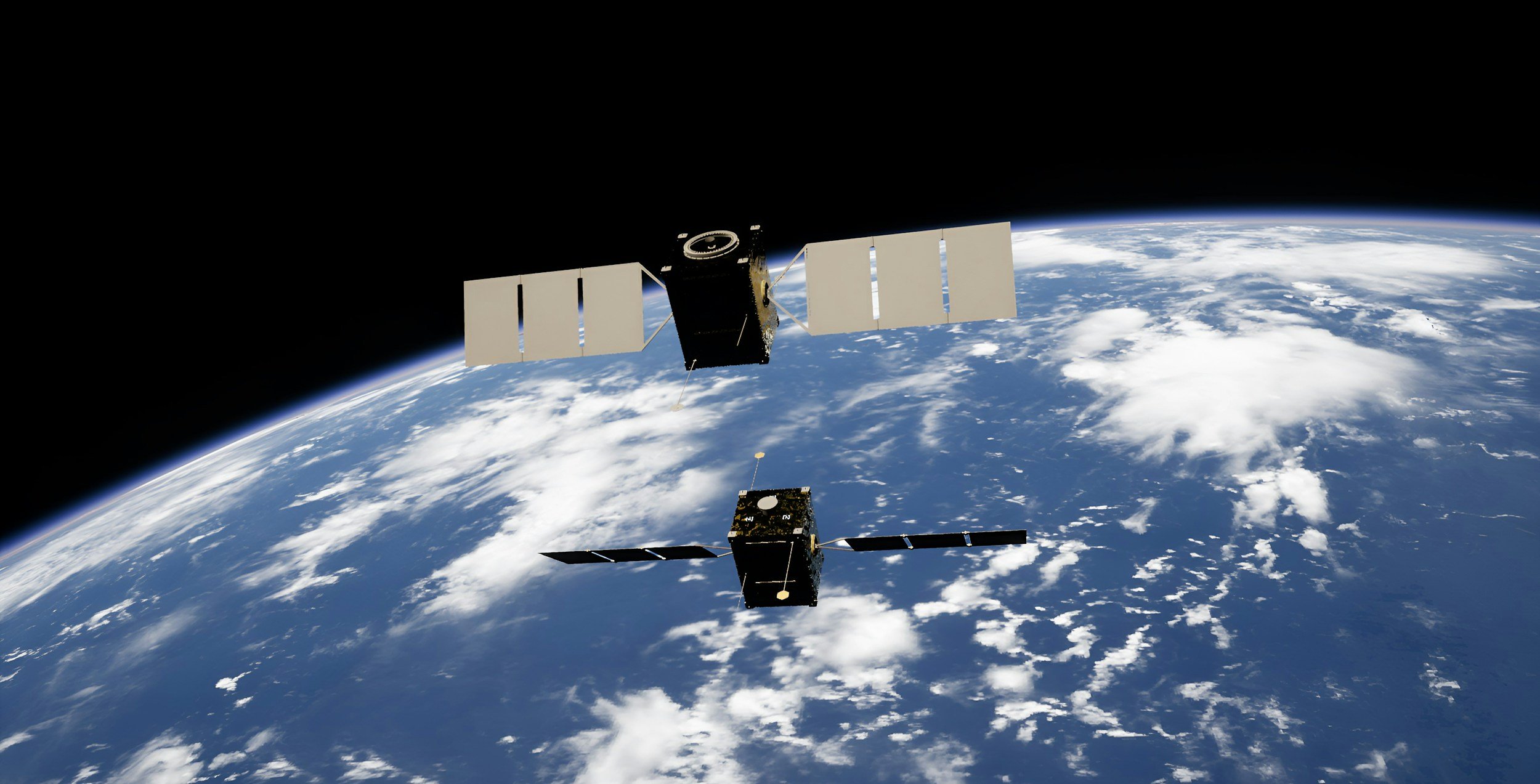
Our tech was built with DARPA to improve Space Domain Awareness classifying objects beyond the diffraction limit.
Our capabilities in the SDA chain are in:
Count and separate below the limit. Multi-source scenes resolved where a conventional camera returns one blob.
Detect change in the first measurement window. Modal signatures shift under rotation and motion before a pixel image shows anything.
Augment the telescopes you already own. Ground deployment first, on existing apertures, no new mount and no new site.
Passive throughout. No illumination, no emission, no revealing your collection geometry.
At geosynchronous altitude, a satellite and the object station-keeping beside it fall inside the same diffraction spot of a large ground telescope. Conventional imaging discards the information needed to separate them before any processing begins. We measure that information instead.
Space Debris Tracking
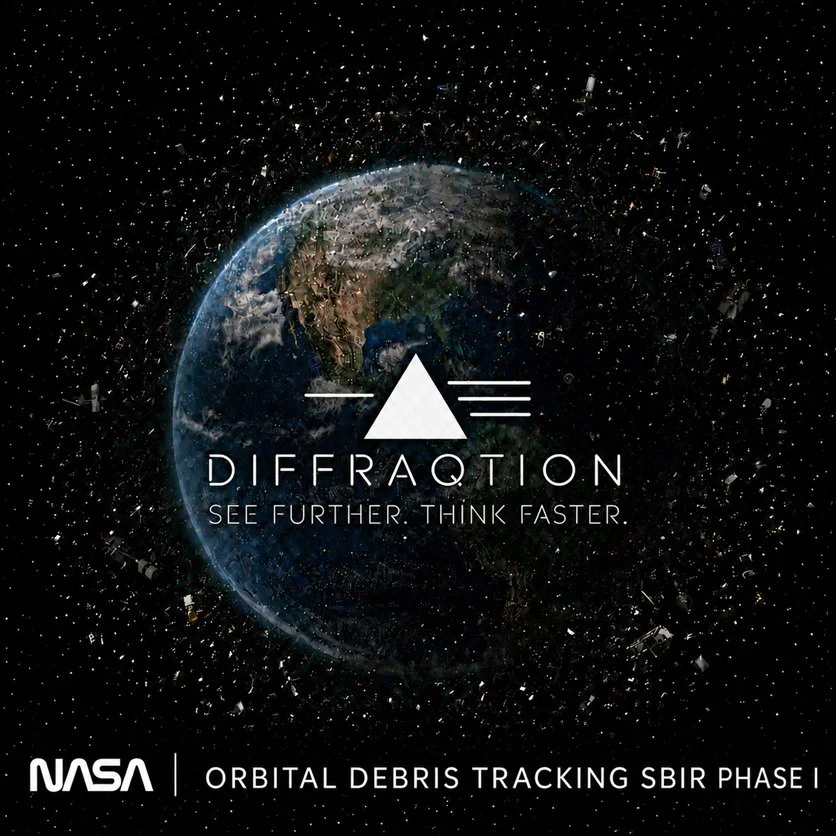
Low Earth orbit is crowding with fragments that are small, fast, and often too close together for the ground sensors tracking them to tell apart. Characterizing that population, its size, motion, and behavior, is a national priority and a direct fit for what our camera does.
Debris fragments and the objects beside them frequently fall inside a single diffraction spot. We pull them apart and count them where a conventional sensor returns one return.
The system runs on the ground apertures already in the tracking network, so coverage scales without new sites or new mounts.
It stays passive throughout, adding to the catalog without exposing how or where you collect.
NASA selected this work for a Phase I SBIR award to characterize and track orbital debris.
The problem is not the processor
Closely spaced objects at GEO sit below the diffraction limit of nearly every sensor that can see them. Resolving them the conventional way means a bigger primary mirror, and the cost of a mirror scales badly. Meanwhile a maneuver that happens between revisits is a maneuver you did not see, and the daylight hours are a blind window for optical tracking.
None of this is a computing problem. A conventional camera measures brightness per pixel. Once two sources are inside one spot, the information distinguishing them is gone at the detector. No downstream model recovers it.
